Can Anyone Get a Copy of a Death Certificate?
Trustworthy's Family Operating System® automatically organizes your most important information and turns it into answers, guidance, and action.
Key Takeaways
Certified death certificates are restricted in most states and can only be received by immediate family members or individuals with a documented legal or financial interest.
Informational (non-certified) copies are widely available, and in many states any member of the public can request one.
Certified copies are required for legal and financial tasks such as probate, bank account closures, life insurance claims, and property transfers.
To get additional copies, request them through the vital records office in the state where the death occurred. Requirements and fees vary by state.
Storing a digital copy in Trustworthy’s Family Operating System® keeps death certificates secure and makes it simple to share them with attorneys, advisors, or family members.
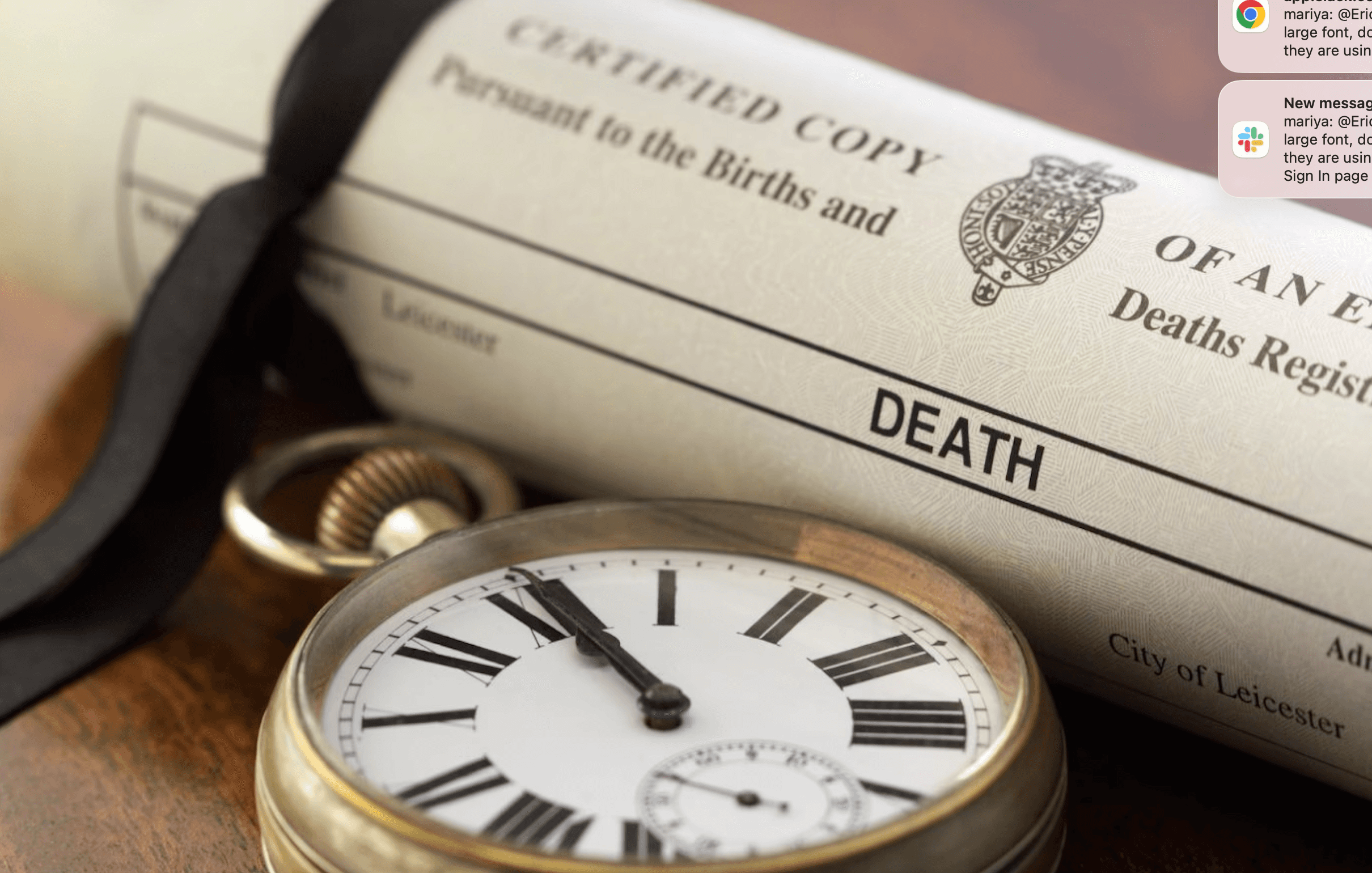
When someone dies, the state issues a death certificate — the official record of their passing. But many people aren’t sure who can request a death certificate, whether anyone can access one, or how to get a death certificate when they need it for estate or financial matters.
This Q&A article walks through who’s legally eligible to request a copy, how the process works, what to do if you’re not authorized, and why the difference between certified vs. informational death certificates matters.
Who Is Authorized to Get a Death Certificate
Q: Who can access a death certificate?
A: Rules vary by state, but access to certified copies of a death certificate is usually restricted to the decedent’s immediate family or someone with a legally recognized interest.
Authorized requesters often include a spouse, domestic partner, parent, child, sibling, grandparent, or grandchild. Beyond family, executors, attorneys, accountants, or financial professionals may qualify if they can document a legal or financial relationship.

In many states, however, any member of the public can request an informational copy of a death certificate.
“This type of copy may not be accepted in legal matters, but it can still provide basic information such as the name, date, and cause of death,” says Andrew Pickett, lead trial attorney and founder of Andrew Pickett Law in Melbourne, Florida.
Q: Are death certificates public record?
A: Yes, but with restrictions. While death certificates are considered public records, most states limit access to certified copies. Informational copies are more widely available, but still subject to each state’s rules.
Q: Why are certified copies restricted?
A: Certified copies include sensitive identifying information, and because they’re used for legal and financial transactions, states restrict access to prevent fraud, identity theft, and unauthorized claims.
Reasons You May Need a Death Certificate
Q: Why would someone need a certified death certificate?
A: Certified copies are essential for settling someone’s affairs. They’re required for life insurance claims, bank account closures, pension benefits, property transfers, and probate.
Min Hwan Ahn, owner of the Law Office of Ahn, Sinowitz & Shen in Pennsylvania, explains:
“People typically require death certificates for a variety of reasons, often related to legal or financial matters. This could include settling estates, claiming life insurance benefits, accessing pensions, or changing title deeds.”
Q: What information is included on a death certificate?
A: A death certificate typically includes the decedent’s name, date of birth, home address, date and location of death, and cause of death. Some states include marital status or next of kin.
A medical examiner, coroner, or licensed medical practitioner certifies the cause of death before the document is filed with the state.
The Process for Getting a Death Certificate
Q: How do you get a death certificate?
A: The process varies by state, but it generally starts with the funeral director, who provides initial certified copies to the next of kin.
To obtain additional copies, you must request them from the vital records office in the state where the death occurred. This usually involves an application, proof of identity, documentation of your eligibility, and a fee.

Q: Can you get a death certificate online?
A: Many states allow online requests through their vital records office or an approved third-party vendor. Others require mail or in-person applications. Always follow your state’s specific instructions.
Q: What is an example of state-specific rules?
A: In Texas, only immediate family members can request a certified death certificate without additional documentation. If you’re not a spouse, parent, child, sibling, or grandparent, you must prove a direct, tangible interest, such as being named in a will or insurance policy.
Texas currently charges $20 for the first certified copy and $3 for each additional copy. Other states set different rules for eligibility and fees.
Certified vs. Informational Copies
Q: What is the difference between a certified copy and an informational copy?
A: Certified copies include complete identifying information and an official seal, making them legally valid for probate, insurance claims, bank account closures, and benefit applications.
Informational copies look similar but exclude certain sensitive details, such as the Social Security number, and cannot be used for legal or financial purposes.

Q: Who can get an informational copy of a death certificate?
A: In many states, anyone can access an informational copy, regardless of relationship. These copies are commonly used for genealogy, verification, or research.
Q: Is a certified copy the same as the original?
A: Yes. A certified copy includes the same details as the original record filed with the state, but it includes a state-issued stamp or embossed seal verifying its authenticity.
If You Are Not Eligible for a Certified Copy
Q: What can you do if you’re not authorized to request a certified death certificate?
A: You may be able to request an informational copy instead. If you need a certified copy for legal reasons, you will need documentation proving your interest — such as a court order, executor paperwork, or beneficiary designation.
Organizing Death Certificates in Trustworthy
Q: How can Trustworthy help your family manage death certificates securely?
A: Once you receive a certified copy, you can upload a digital version to Trustworthy’s Family Operating System®. Trustworthy protects sensitive information with two-factor authentication, hardware security keys, tokenization, and AES-256 encryption.
You can also share documents with attorneys, financial planners, or family members through controlled access — without emailing attachments or tracking paper copies.

The Bottom Line
Knowing who can request a death certificate, how to get a death certificate, and the difference between certified vs. informational death certificates can prevent delays during an already difficult time.
While each state sets its own rules, organizing and securing these documents is far easier with a digital vault like Trustworthy's, designed to keep your family’s essential information safe, private, and accessible when needed.


We’d love to hear from you! Feel free to email us with any questions, comments, or suggestions for future article topics.