Are Safety Deposit Boxes Insured? What You Need to Know
Trustworthy's Family Operating System® automatically organizes your most important information and turns it into answers, guidance, and action.
Key Takeaways
Safety deposit boxes are not insured by banks or the FDIC, leaving contents unprotected.
Loss, theft, or damage may not be recoverable without separate insurance coverage.
Homeowners or renters policies may offer limited protection with restrictions.
For important documents, secure digital storage avoids physical risks while improving access and control.
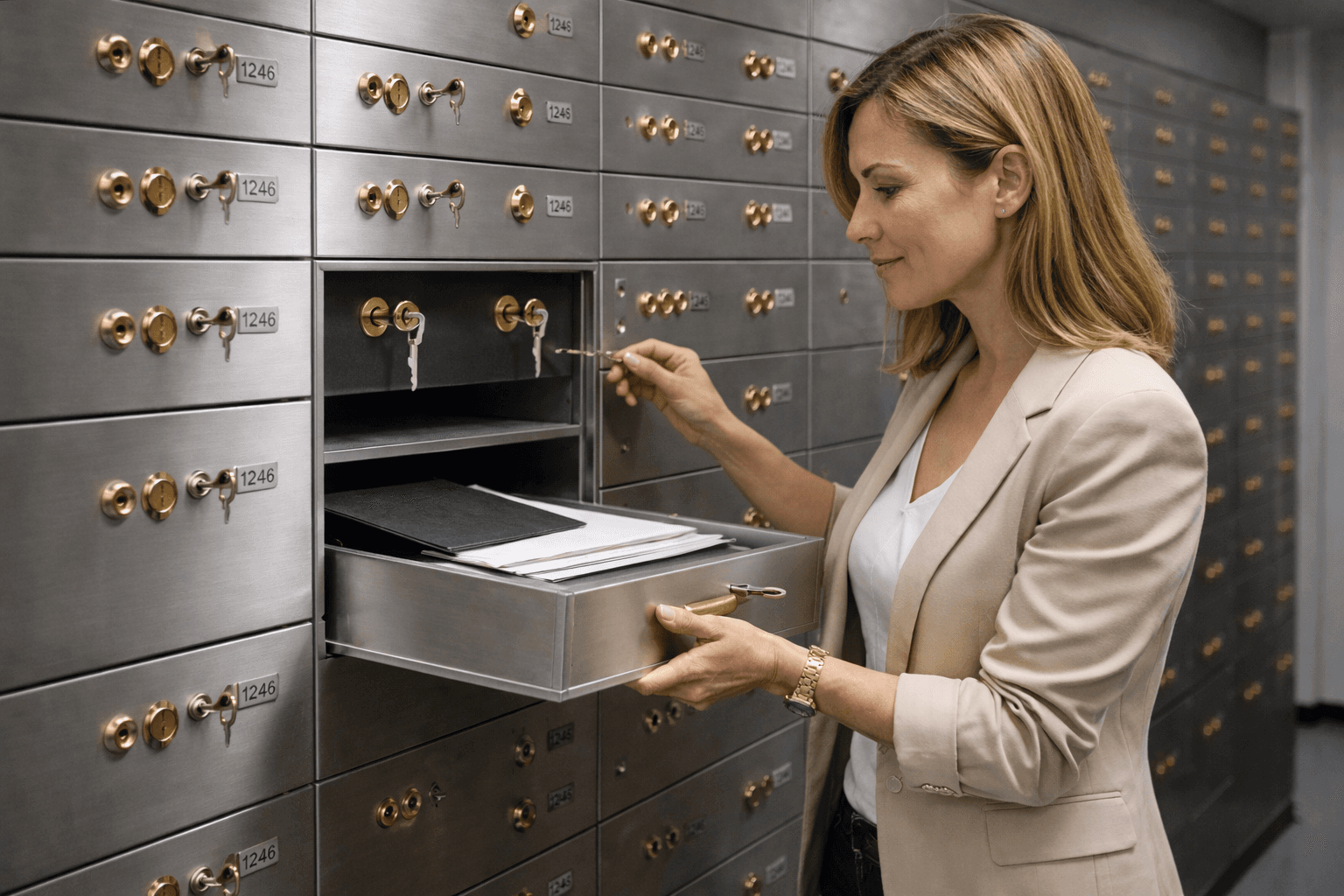
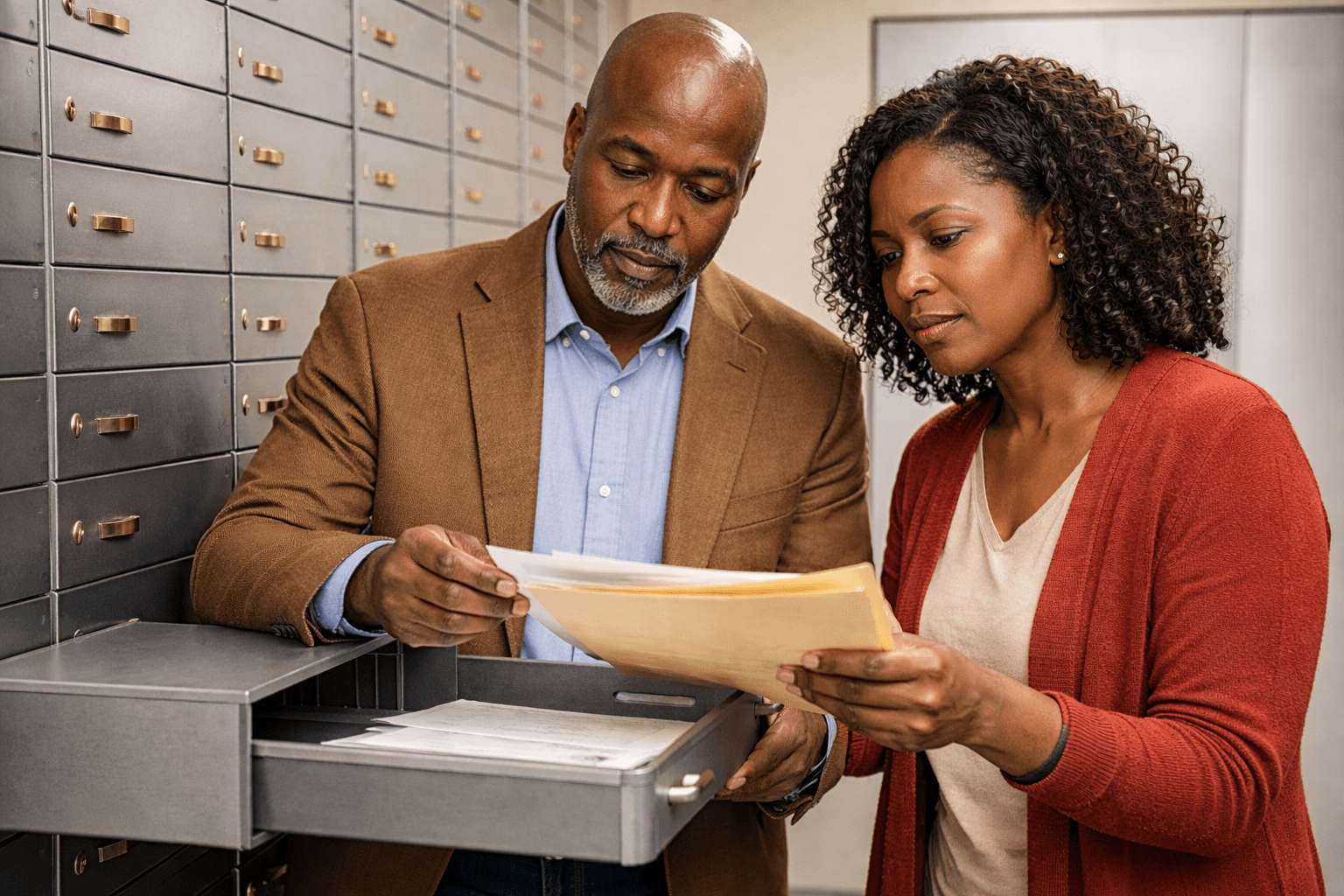
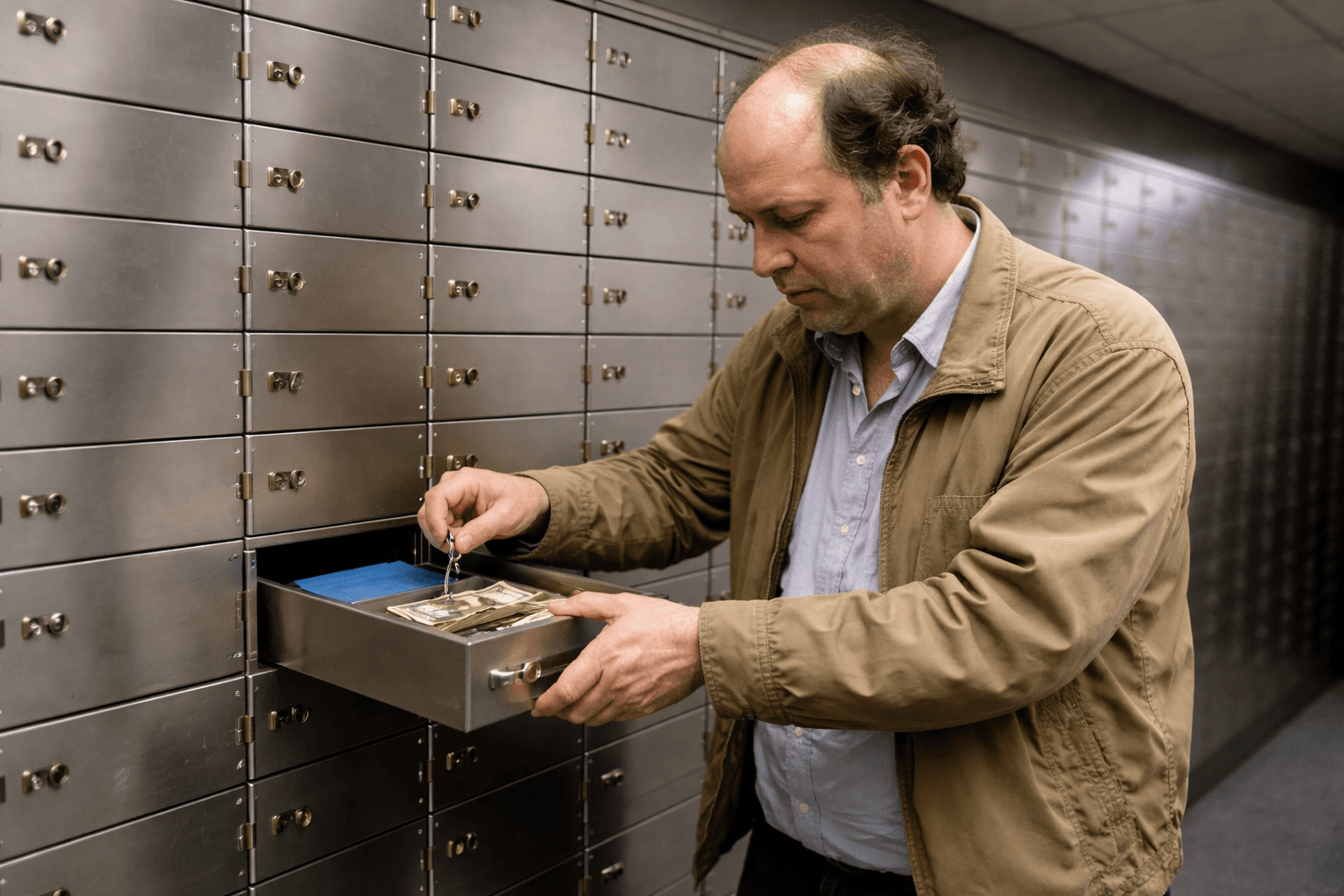
Safety deposit boxes are often thought of as one of the most secure places to store important documents and valuables. They’re located inside bank vaults, protected by layers of physical security, and associated with trusted financial institutions.
But there’s a critical detail many people overlook: The contents of a safety deposit box are not automatically insured.
Understanding what is, and isn’t, protected can help you decide whether a safety deposit box is the right place for your most important items — or whether it makes more sense to consider better alternatives to a safety deposit box.
Understanding Insurance and Safety Deposit Boxes
Q: Are safety deposit boxes insured by the bank or FDIC?
A: No. Safety deposit boxes are not insured by the bank or the FDIC.
The Federal Deposit Insurance Corporation, or FDIC, insures deposits held in accounts like checking and savings — but a safety deposit box is not a deposit account. It’s simply a rented storage space.
Banks also typically disclaim responsibility for the contents of the box. Even though the box is housed in a secure vault, the institution does not insure what you place inside.
Q: Why aren't safety deposit box contents insured?
A: There are a few reasons:
Banks don’t know what’s inside your box.
They can’t verify value or ownership of the contents.
Liability would be difficult to manage across customers.
Because of this, responsibility for protecting those items falls entirely on you — which is why many people explore safer, more accessible ways to store important documents.
When Something Goes Wrong With a Safety Deposit Box
Q: What if items are lost, stolen, or misplaced?
A: If something goes missing from your safety deposit box, you may have little to no recourse.
While incidents are rare, they do happen — and when they do, the burden is typically on the customer to prove what was inside and its value. Without documentation, recovery can be difficult or impossible.
Q: What if the bank is damaged by a disaster?
A: Bank vaults are designed to be highly secure, but they are not invulnerable.
Events like fires, floods, or structural damage can affect safety deposit boxes. In those cases:
Contents may be damaged or destroyed.
Recovery may take time — or not happen at all.
Compensation is not guaranteed.
Without insurance, any loss is yours to absorb.
How to Protect the Contents of a Safety Deposit Box
Q: Would homeowners or renters insurance cover it?
A: Sometimes, but coverage is often limited.
Some homeowners or renters insurance policies may include off-premises coverage for items stored in a safety deposit box. However:
Coverage limits are usually low.
Certain items (like cash or documents) may not be covered.
You may need a separate rider or endorsement.
Q: What are the limitations of that coverage?
A: Even with additional coverage, there are trade-offs:
Value caps may not reflect what’s actually stored.
Claims may require detailed proof of contents.
Certain documents may be considered irreplaceable rather than insurable.
This creates a gap between where items are stored and how well they’re protected.
Why This Creates Risk for Important Documents
Q: What types of items are most vulnerable?
A: Many people store critical documents in safety deposit boxes, including:
Wills and estate planning documents.
Identification (passports, Social Security details).
Insurance policies.
Property records.
Financial account information.
These aren’t just valuable — they’re often essential to access quickly.
If they’re lost, damaged, or inaccessible, the impact can go beyond financial loss and create delays at critical moments.
A More Reliable Alternative for Documents
Q: How can you reduce these risks?
A: The core issue with safety deposit boxes isn’t just insurance. It’s also the combination of:
Limited access.
Lack of coverage.
Physical vulnerability.
Dependency on a single location.
A better approach is to store documents in a way that keeps them secure while also making them accessible when needed.
Q: How can digital storage help?
A: A secure digital vault eliminates many of these risks by removing the reliance on a physical location.
With Trustworthy, you can:
Store sensitive documents securely using advanced encryption.
Access information anytime, without relying on bank hours.
Share access with trusted individuals when appropriate.
Keep everything organized and easy to find.
The Bottom Line
Safety deposit boxes may feel secure, but their contents are not insured by default. If something goes wrong, you may be left without protection or compensation, unless you buy separate insurance.
For documents and information that matter, it’s worth considering a storage approach that doesn’t rely on physical access or limited insurance coverage — so you’re not left dealing with gaps when it matters most.
We’d love to hear from you! Feel free to email us with any questions, comments, or suggestions for future article topics.