Documents That Should Never Go in a Safety Deposit Box
Trustworthy's Family Operating System® automatically organizes your most important information and turns it into answers, guidance, and action.
Key Takeaways
Safety deposit boxes can limit access to documents when they are needed most.
Important documents like wills, powers of attorney, and IDs should remain easily accessible.
Delays after death or during emergencies can create legal and logistical complications.
Secure digital storage offers better access, organization, and controlled sharing.
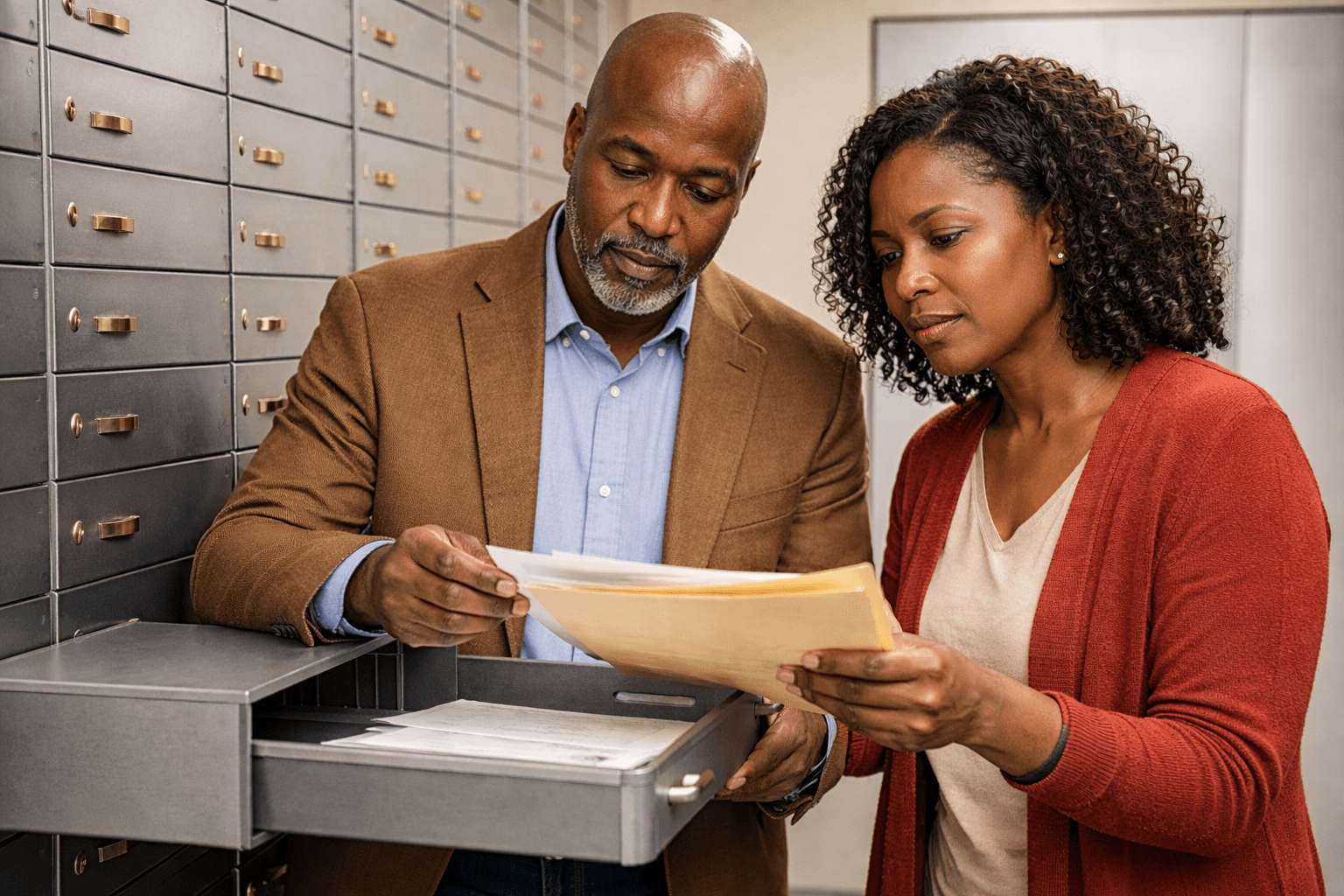
Safety deposit boxes are often seen as one of the safest places to store important documents. They’re secure, protected, and located inside bank vaults.
But security isn’t the only factor that matters.

For many documents, access is just as important as protection — and that’s where safety deposit boxes can create serious problems.
Understanding what not to store in a safety deposit box can help you avoid delays, legal complications, and unnecessary stress — and consider better ways to store important documents.
Why Some Documents Shouldn't Be Stored in a Safety Deposit Box
Q: What are the main risks of storing documents in a safety deposit box?
A: The biggest issue isn’t security — it’s access. Safety deposit boxes come with several limitations:
Limited access during bank hours.
Delays in emergencies.
Legal restrictions after death.
Dependency on a single physical location.
These limitations can turn a secure storage option into a barrier when documents are needed quickly.
Documents You Should Never Store in a Safety Deposit Box
Q: Should you keep your will in a safety deposit box?
A: In most cases, no.
After death, access to a safety deposit box is often restricted, which can delay retrieving the will. This can create a circular problem where the executor needs the will to manage the estate — but can’t access the will without court approval.
This is one of the most common issues families face when dealing with who can access a safety deposit box after death.
Q: Why shouldn’t powers of attorney be stored there?
A: Powers of attorney are often needed during emergencies or periods of incapacity.
If the document is locked in a safety deposit box, the person authorized to act may not be able to access it when it’s needed, defeating its purpose entirely.
Q: Why should medical directives be easily accessible?
A: Medical directives guide healthcare decisions in urgent situations.
Doctors and hospitals may need immediate access, and delays can affect care. Storing these documents in a safety deposit box can make them effectively unavailable when they’re most important.
Q: Why shouldn’t you store passports or IDs in a safety deposit box?
A: Identification documents are often needed on short notice — for travel, verification, or emergencies.
If they’re locked in a bank vault, access depends on business hours and location, which can create unnecessary complications.
Q: Why should insurance documents be accessible?
A: Insurance policies are often needed during stressful or time-sensitive situations.
Whether you’re filing a claim or confirming coverage, delays in accessing these documents can slow the process and add frustration.
This becomes even more important when you consider broader risks, including whether safety deposit boxes are insured and what happens if something goes wrong.
Documents That Are Safe to Store in a Safety Deposit Box
Q: What types of items are better suited for a safety deposit box?
A: Safety deposit boxes are best for items that are:
Rarely needed.
Difficult to replace.
Not time-sensitive.
Examples may include original certificates, collectibles, or physical valuables.
Where to Store Important Documents Instead
Q: What are safer and more accessible alternatives?
A: A better approach balances security with accessibility. Some options include:
A home safe for limited physical storage. Home safes, however, can be vulnerable to theft or disasters.
A secure digital vault (like Trustworthy's) for documents and information.
A hybrid approaches that combine physical and digital storage.
Many people ultimately explore alternatives to a safety deposit box that provide both security and access.
How to Organize Documents for Easy Access
Q: What does a good document storage system look like?
A: An effective system should be:
Organized by category.
Easy to search and retrieve.
Accessible to the right people.
Secure against unauthorized access.
Trustworthy's Family Operating System meets all of these requirements. The goal is not just to store documents but to make sure they can be used when needed.
A More Practical Approach to Document Storage
Q: How does digital storage improve both access and security?
A: A secure digital vault removes many of the limitations of physical storage.
Instead of relying on bank hours or legal access processes, you can:
Store documents securely using advanced protection.
Access information anytime.
Share specific documents with trusted individuals.
Maintain control over who sees what.
With Trustworthy, you can organize everything from estate documents to insurance policies and share access with the people who need it — without giving up control.
The Bottom Line
Safety deposit boxes offer strong physical security, but for many documents, limited access creates real risks.
If a document is important enough to protect, it’s important enough to access without delays.
Choosing a storage approach that balances both can help you avoid complications and ensure your information is available when it’s needed.
We’d love to hear from you! Feel free to email us with any questions, comments, or suggestions for future article topics.